Libra Professorship Program Highlights

Libra Professorship Program Highlights

Rod Sparrow Photo

Since established in 1989, the ten Libra Professorships at the University of Maine have been transformational in attracting and supporting outstanding faculty. Libra Professors, among the best and brightest in their fields of study, have provided exceptional educational opportunities for thousands of UMaine students across disciplines over the last three decades. The design of the program ensures that active recruitment of new faculty is ongoing as new ideas are constantly being explored and developed at our flagship research university.

Meet two of our current Libra Professors below:
Libra Professor in Maine Business School (MBS)

Dr. Rusty Stough

Dr. Rusty Stough arrived at UMaine with a plethora of experiences. In his undergraduate career, he majored in Chemistry and Biology while also being a student-athlete on the football team. Upon graduation, he began a pharmaceutical research career. The success of his research brought him into the world of marketing, which eventually led him to pursue his Masters in Colorado, and later, his Ph.D. in Wisconsin. As he was looking for his next career move into higher education, Rusty and his wife were thrilled to find Maine as their next destination.

The Libra Foundation’s support of his position has allowed Rusty to bring his family to Maine while continuing to grow as a professional, a teacher, and as a lifelong learner. Through his professorship, Rusty has worked to create and sustain partnership programs in his classrooms that work with local employers to find out what skills they are looking for in their job candidates. Because of these programs, Dr. Stough’s students are graduating with highly sought-after skills in the business world, such as computer programming. He has also started a partnership with Penobscot Theatre Company, which spawned a mutually beneficial relationship between the theater and UMaine students. Those students gain real-world marketing experience by helping to promote some of the shows, including last season’s well-received performance of 9-5.

Stough has also offered himself as a mentor for both undergraduate and graduate students working on research projects in the business school. One of his favorite memories since being at UMaine was publishing a paper with one of his undergraduate students on the role of verification among social media and internet influencers.

 Stough has also presented his research on non-conscious attention at a few virtual conferences and hopes to travel to some in person as a UMaine representative in the coming years. The Libra Foundation has been instrumental in helping Stough make these strides here at UMaine, “we do things with eye-tracking and other EKG-type things that are expensive and it’s expensive to get participants in to recruit for our research. The Libra allows me to do that very easily.”

Stough’s students feel the benefits of this funding as they gain tangible and transmissible skills in the classroom and in their desired professional fields. This is made possible with the funding for a Teaching Assistant, giving more students one-on-one assistance and support, which makes all the difference in their educational experience.

The Libra Foundation opens the doors at UMaine for professors who make a huge impact on their student’s lives and the University community. Thanks to the Libra Foundation, UMaine has been lucky to welcome Dr. Rusty Stough as someone who represents the innovation, drive, and passion that Black Bears take pride in as we seek to define tomorrow.
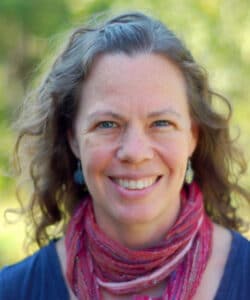
Libra Professor in the College of Natural Sciences, Forestry, and Agriculture

Dr. Margaret L. Estapa

Growing up in Iowa, the coast was an unfamiliar and mysterious place to Dr. Margaret Estapa, but the Libra Foundation helped her build her dream career as a UMaine Oceanography instructor at the Darling Marine Center. Black Bear alum Meg Estapa completed her Ph.D. in the Oceanography program at UMaine with the help of her mentors, professor emeritus Dr. Larry Mayer and professor Emmanuel Boss. After graduating in 2011, Estapa worked at Skidmore College in New York until Dr. Mayer retired in 2019. Estapa applied for his position and moved back to Maine, much to the delight of her family, many of whom love Maine.

Her position is made possible with the assistance of the Libra Foundation, and Dr. Estapa has made sure the support is put to good use. Students in Estapa’s courses in the Semester-by-the-Sea program have the unique opportunity to practice repeated, hands-on scientific methods skills through the Estapa Lab.  During Semester-by-the-Sea, students are often out in the field collecting samples, operating tests in the lab, and being exposed to cutting-edge technology and methods. Access to Estapa’s facilities and technology is possible because of the generous financial support from the Libra Foundation.  Touching on her passion for field-based learning and teaching, Estapa said, “the courses that are farther from my expertise are the ones where I learn the most and the ones where I grow the most as a scientist and a teacher. The ones that are closer to my expertise, I don’t necessarily grow as much, I just have deeper conversations about things. There’s so much to like about all of them, regardless of how close they are to what I do.” Continuing from her Ph.D. work, Estapa is researching the ocean’s carbon cycle and how the ocean and marine life interact with climate change and global warming. In addition to the resources for ongoing projects, the Libra Foundation has also helped with startup costs for new projects such as Estapa’s Marine Microplastics Research program and research using remote sensing of the coastal environment through some of the satellites in orbit around the Earth.

Estapa’s lab continues to contribute to a field of research that is near and dear to Mainers and is relevant and urgent for the entire planet. Her return to UMaine is thanks to the Libra Foundation and their professorship program. Estapa’s gratitude for the Libra support extends even beyond her career, “I’m living the life I want to live for personal and professional reasons.”

None of the information on this website should be considered legal or financial advice. We encourage you to consult with your own legal counsel or financial/tax advisor before deciding whether or not to proceed with a gift or change to your estate plan.

Sharing

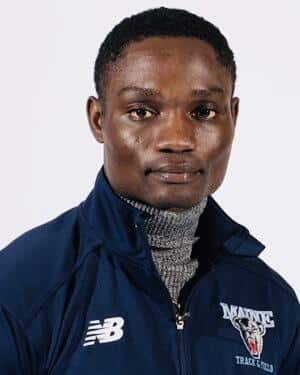
Crispin Kamundala

Andrew Gustafson in a hard hat
Our student gratitude story this week features Crispin Kamundala, a 4th-year political science student with a double minor in legal studies and foreign affairs. He received the John M. Nickerson scholarship.

The John Mitchell Nickerson University of Maine Memorial Scholarship Fund at the University of Maine at Orono was established in 2014 by the University of Maine Foundation with a bequest from John M. Nickerson, a member of the Class of 1959. This fund endows merit-based scholarships to be awarded to those juniors and seniors majoring in political science who are residents of the State of Maine, who have demonstrated scholarship of the highest order, and who have the greatest potential to serve the public unselfishly. 

Kamundala certainly emanates this, as he aspires to work for the U.S. Department of State Foreign Service as a consular officer, before returning to the Democratic Republic of the Congo to either become an immigration lawyer or work as a consular officer in an embassy. Crispin’s story serves to further emphasize how vital donor endowments are to our students, and the great things they help our students to accomplish in their future. 

Crispin Kamundala was also featured on UMaine News, as a 2022 recipient of the Benjamin A. Gilman International Scholarship, where he is currently studying abroad in Lyon, France, to deepen his understanding of US/EU relations and strengthen his French “legalese.” To read more about his story, click here.


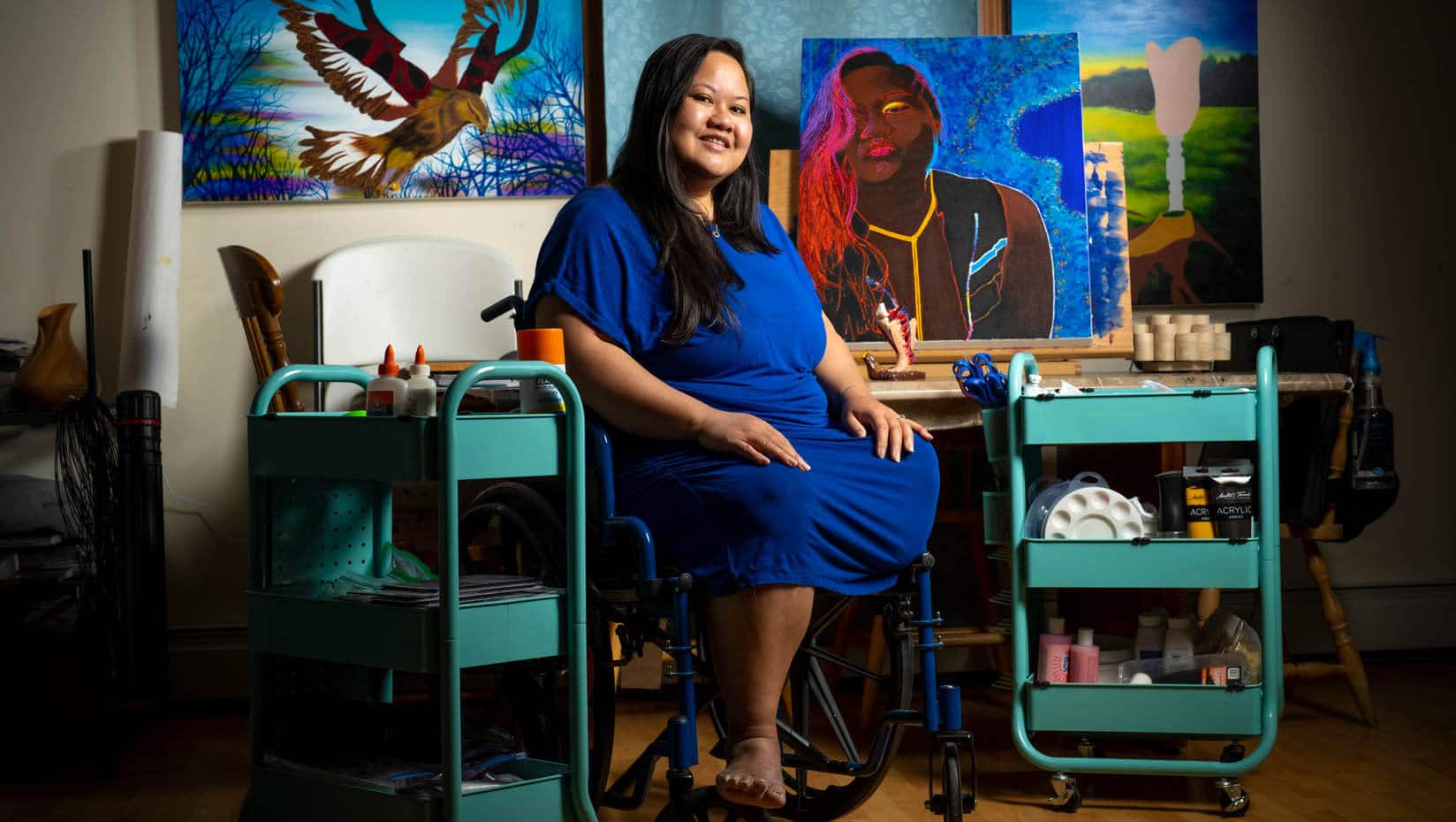
Chanthu Millay

Andrew Gustafson in a hard hat

Chanthu Millay’s art is raw and intimate: a technicolor self-portrait in painstaking detail, a metal sculpture comprised of pieces of her old prosthetic leg, a ceramic sculpture depicting the emotions she experienced as her family’s lone survivor of the violent Khmer Rouge regime in Cambodia.  

Millay’s art wasn’t always so personal. Her education at the University of Maine has allowed her to open up and tell her exceptional life story through her art — and she hopes to do the same as an art educator once she graduates in December 2023. After her experience with her professors and her peers, she thinks she may want to go on and pursue her master’s in order to become a professor of art at the university level. She hopes to someday help students find themselves through art the way that she has.

When entering college as a nontraditional student, financial struggles were a part of her everyday reality, which was in part offset thanks to the Estelle Phillips Springer Scholarship, a Foundation endowment created by Margaret Phillips ‘42,  in memory of her sister Estelle Phillips Springer ‘68. This scholarship helped Chanthu with the financial strain of re-entering college as a non-traditional student. She hopes to be able to honor the support she received by giving back to the community as a teacher. 

To read more about Chanthu’s exceptional life and journey with her art education at the University of Maine, check out the extended Black Bear profile written about her on the UMaine News site. 


Makaila Bailey – Class of 2023

Andrew Gustafson in a hard hat

Makaila Bailey, a student in the Environmental Horticulture Program, has had a significant impact on our campus. This past summer, she started working to propagate the Campana elm tree, which lived next to Hitchner Hall for over 150 years. Before it had to be removed in August for safety, she was a part of the team collecting cuttings, in hopes to propagate more and continue the legacy. 

Makaila was also a 2021/2022 recipient of the Jane M. McCabe Memorial Horticulture Scholarship, which she explains has helped her be successful during her time at the University.  She states, ”Without these scholarships, I do not think I would have been able to focus on learning and pursuing my degree as much as I have,” which is evidenced by her plan to obtain her degree in just three years in Spring 2023. 

To read more about Makaila’s summer experience, click here to read the UMaine news article.


None of the information on this website should be considered legal or financial advice. We encourage you to consult with your own legal counsel or financial/tax advisor before deciding whether or not to proceed with a gift or change to your estate plan.

Sharing

Anonymous Gift Helps to Fund New Position

Anonymous Gift Helps to Fund New Position

Ferland Center Opening

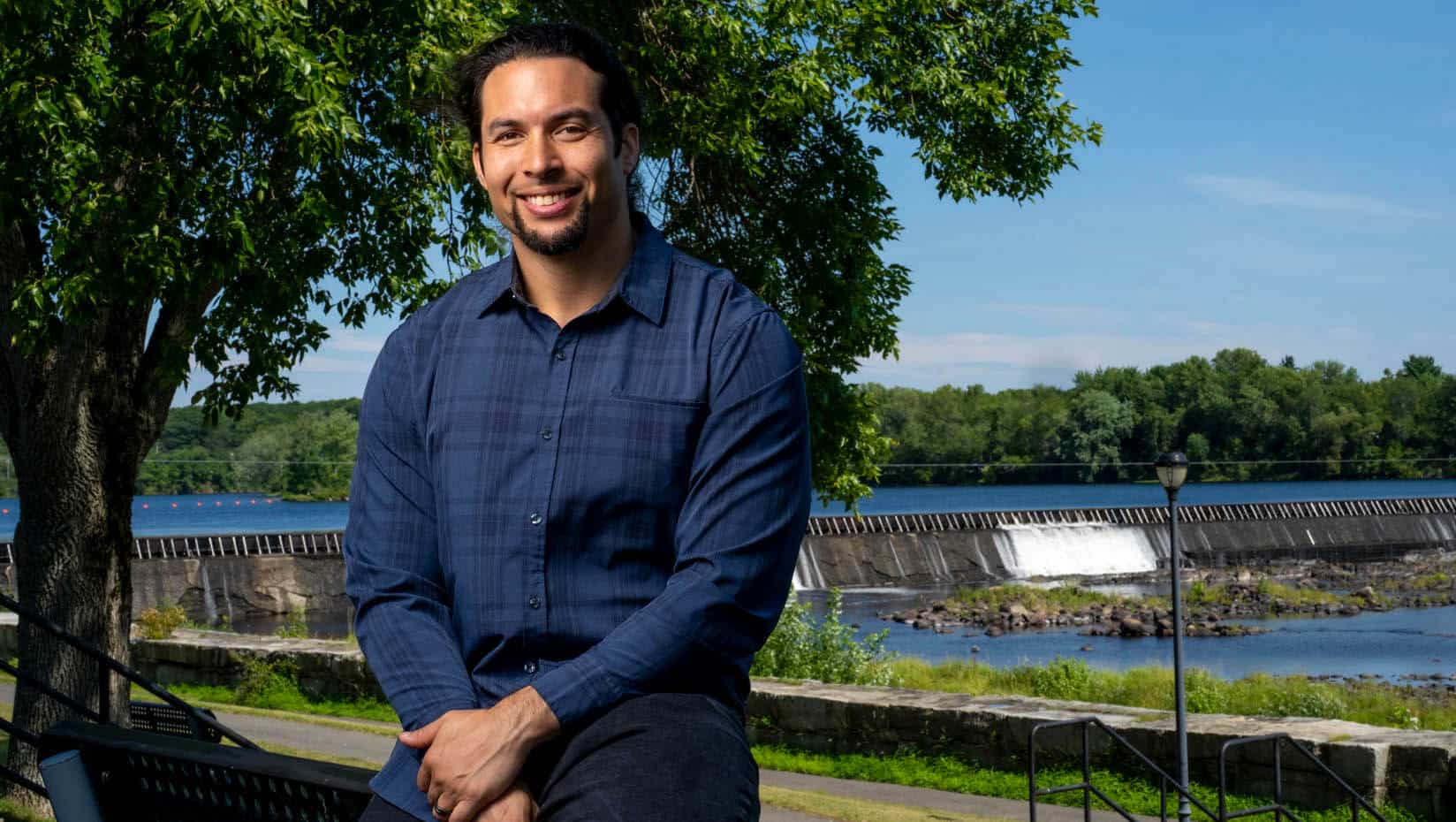
Anonymous donors’ $55,000 gift to create the Native American Cultural Sustainability Fund at the University of Maine Foundation provided the seed funding to assist a collaborative hire between Native American Programs and UMaine Extension. Tony Sutton began the fall semester as Assistant Professor of Native American Food Systems at UMaine.

Sutton’s position will focus on Native American food systems and sovereignty, building on relationships established with the Tribes and grants and programs developed in Native American Programs.

Sutton moved to Maine from Oregon in 2008. His mother is a member of the Passamaquoddy Nation, so even though he grew up on the West Coast, moving to Maine felt like a homecoming. Plus, after studying history for his undergraduate degree, Sutton felt like he had a mission to represent Wabanaki stories and knowledge, which were so often excluded from historical narratives.

As the donors shared, “We understand that Wabanaki ecological knowledge is based on the premise that all beings and things on earth are relatives to humans, and that putting this viewpoint into practice has sustained earth’s gifts for the benefit of all for thousands of years. We want to encourage such vital practices. By supporting the university’s Wabanaki science programs, we hope to move western scientific thinking into accepting that Wabanaki ecological knowledge is an equally valid approach to the world, one that is necessary for survival in a sustainable way.”

Darren Ranco, chair of Native American Programs, says that filling the position has been “one of the top priorities for university collaboration by the Tribal Nations over the last several years.” When Sutton applied, the choice was clear.


None of the information on this website should be considered legal or financial advice. We encourage you to consult with your own legal counsel or financial/tax advisor before deciding whether or not to proceed with a gift or change to your estate plan.

Sharing