University of Maine Foundation President and CEO Jeffery Mills to retire Sept. 1

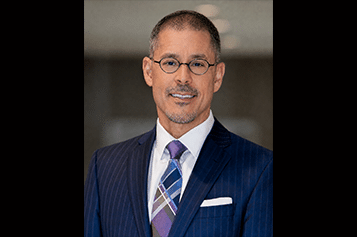
Portrait of Jeff Mills

The University of Maine Foundation Board of Directors announced the retirement of Jeffery Mills, Ph.D., as president and CEO effective Sept. 1, 2026.

“I am very pleased to finish my career at my alma mater, the University of Maine. My time at the Foundation has been personally and professionally rewarding and I am looking forward to watching the Foundation continue to grow under new leadership,” said Mills. 

Mills, a UMaine alumnus from the Class of 1982, has served as president and CEO since July 1, 2012. He brought extensive experience in nonprofit fundraising and higher education leadership to the role. Before joining the Foundation, he spent seven years as vice president of university advancement at Monmouth University in West Long Branch, New Jersey. He previously served as vice president of advancement at UMaine from 2002 to 2005 and as president and CEO of the University of Maine Alumni Association from 1997 to 2005. He also served in the Maine Legislature from 1983 to 1993, including terms in both the Senate and House of Representatives.

“Because Jeff gave us ample notice of his plan to retire, we are able to thoughtfully launch the search for our next Foundation leader,” Keating said. “After Jeff’s outstanding leadership and results, the Board is confident we can recruit a successor who will not only sustain the UMaine Foundation’s momentum but guide it to new heights.”

Mills’ accomplishments include record-breaking fundraising, significant endowment growth, oversight of the 2016 merger of the University of Maine Development Office with the Foundation, and the opening of the Portland office at 300 Fore St., which the Foundation shares with the Maine Graduate and Professional Center and the University of Maine School of Law.

He oversaw the university’s Vision for Tomorrow Capital Campaign, which raised $208 million — exceeding its goal by $8 million — by June 2020. In 2016, the Foundation launched the first annual Maine Day of Giving and the annual employee giving campaign. Under Mills’ tenure, the matching requirements for the historic 2020 $320 million grant from the Harold Alfond Foundation are nearing completion. UMaine also received the largest single gifts from individuals in its history during his leadership.

During Mills’ tenure, the Foundation’s endowment grew by more than 222%, and total assets increased 200%.

While serving as president and CEO of the University of Maine Alumni Association, Mills co-led the fundraising campaign to construct Buchanan Alumni House with then-Foundation President Amos Orcutt and secured the naming gift from alumnus Robert Buchanan ’44.

In addition to his professional accomplishments, Mills has led by example. He and his wife, Tammy Mills, Ph.D., senior lecturer of education in the College of Education, are loyal donors. They are members of the Triple Crown Donor Society, which includes the President’s Club, the Charles F. Allen Legacy Society and the Stillwater Society. Their philanthropy includes the establishment of three endowed funds: the Mills Family Scholarship, now also supported by the next generation of the Mills family; the Dr. Jeffery Mills ’82 & Dr. Tammy Mills ’04G Collins Center for the Arts Fund; and the Jeffery and Tammy Mills Alumni House Endowment Fund.

Throughout his career, Mills has periodically taught a strategic management course in the Maine Business School and has served on numerous UMaine committees.

Mills earned his master’s and Ph.D. degrees from Arizona State University and completed a certificate in nonprofit management at the Harvard Kennedy School.

“Jeff Mills, with his deep black Bear roots and loyalty, has been instrumental in building the future of the University of Maine. His institutional knowledge, commitment to education, steadfast leadership, and skills as a fundraiser will be greatly missed, and we wish him all the best in his future endeavors.” Ferrini-Mundy said.

In 2022, Mills received the Council for Advancement and Support of Education (CASE) Commonfund College and University Foundation Award. In 2025, he was appointed to national leadership committees with both CASE and the Association of Governing Boards of Universities and Colleges (AGB).

The Foundation Board has engaged AGB Search, the executive search firm affiliated with the Association of Governing Boards of Universities and Colleges, to conduct a national search, with the expectation that a new president and CEO will be in place before Mills’ retirement.

The University of Maine Foundation is a separate nonprofit organization from the university system. Established in 1934, it maintains offices in Portland and on the University of Maine campus in Orono. The Foundation encourages private support for the University of Maine, manages assets of more than $500 million, and employs more than 40 staff members.

Celestial Fish

Celestial Fish’s UMaine experience has been shaped by community, research, and the generosity of donors.

“The scholarship allowed me to attend the university’s Semester by the Sea program at the Darling Marine Center for both the fall and spring semesters,” Celestial shared. “It gave me two semesters of hands-on experience with the ocean and the opportunity to connect with people across Maine’s marine science field.” The support also helped her collaborate on her capstone research project with graduate student Dara Yiu, studying juvenile pollock stomach contents in rocky intertidal habitats along the coast of Maine.

After graduating in May 2025, Celestial began working as the Residence Life and Outreach Coordinator at the Darling Marine Center. She plans to continue pursuing marine science opportunities in New England to further develop her skills and gain more field experience.

Reflecting on her time at UMaine, Celestial credits the community for shaping her success. “I had the opportunity to connect with amazing students and faculty who truly cared about giving me the best possible education,” she said. “That sense of community and shared passion helped me make it through my time at UMaine and graduate with my bachelor’s.”

As a nontraditional transfer student, Celestial understands firsthand how donor support changes lives. “Even though I was a little older when I returned to college, I couldn’t have afforded tuition and room and board without loans. Scholarships allowed me to focus on my classes and excel in my schoolwork,” she said. “They make a huge difference in students’ lives.”

Editor’s Note: Celestial is from Portland, Maine, and received the John and Elaine (Willis) Morin Scholarship

President/CEO Appointed to Two National Leadership Committees

President/CEO Jeff Mills at the Foundation's Annual Luncheon, 2025.

Orono, Maine — The University of Maine Foundation is pleased to announce that President/CEO Jeffery N. Mills has been selected to serve in leadership roles on two of the nation’s most influential professional committees for higher education fundraising and foundation governance.

Mills has been appointed to the Council of Foundation Leaders, an advisory group associated with the Association of Governing Boards of Universities and Colleges (AGB). The Council consists of senior foundation executives from across the country who provide insight on governance priorities, best practices, and strategic relationships between universities and their affiliated foundations. The Council meets quarterly and advises AGB on issues central to the advancement of higher education philanthropy.

“Jeff Mills brings a depth of experience in foundation leadership and a demonstrated commitment to strengthening the partnership between universities and their foundations,” said George P. Watt, Jr., AGB Senior Fellow and Senior Consultant. “His perspective will be an asset to the Council and to the institutions we serve.”

Mills has also been appointed to the Council for Advancement and Support of Education (CASE) College and University Foundation Leadership Committee. This committee focuses on national leadership issues affecting university foundations and helps shape the agenda for the annual CASE Conference for College and University Foundations. CASE is the global membership organization dedicated to advancing education through alumni engagement, communications, and philanthropy.

“Jeff is widely respected among advancement professionals for his strategic leadership and his focus on mission-driven outcomes,” said Greg Willems, Chair of the CASE Leadership Committee. “We are pleased to welcome him to the committee and look forward to his contributions.”

In 2022, Mills was recognized by CASE as a recipient of the Commonfund College and University Foundation Award, honoring individuals who have made significant contributions to the quality, effectiveness, and leadership of university foundations.

Mills has served as President/CEO of the University of Maine Foundation since 2012. He previously served as Vice President for Advancement at Monmouth University in New Jersey and as Vice President for Advancement and President of the Alumni Association at the University of Maine, among other higher education leadership roles. Under his leadership, each institution experienced record philanthropic growth.

University of Maine President Joan Ferrini-Mundy praised Mills’ selection, “Jeff Mills is an outstanding professional whose leadership and commitment to the University of Maine have had a profound impact on our university. I am proud to be his colleague and congratulate him on being recognized by his peers for important positions at the national level.”

University of Maine Foundation Board Chair Chris Keating also recognized Mills’ record of achievement.
“Jeff has broken fundraising records everywhere he has served—public and private institutions, in both rural and metropolitan settings,” Keating said. “Every major campaign he has led has finished on schedule and over goal. His national appointments reflect a career defined by disciplined leadership and consistently outstanding results.”

Libby’s Gift Provides Learning Space for the College of Education and Human Development

Libbys Learning Space Ribbon Cutting

During Family and Friends Weekend on September 26, the College of Education and Human Development held a dedication ceremony honoring Major General (Retired) Bill Libby ’66, ’67G and Cindy Fuller Libby ’67, ’96G for their generous gift to create the Libby and Fuller Family Learning Commons on the first floor of Shibles Hall. Faculty, staff, and students were present to honor the gift and share stories of how they’ve been able to utilize and enjoy the new space.

The Libbys wanted their gift to transform a space into a “home” for students in the College of Education and Human Development, fostering community and support through a shared space that generations could enjoy.

Major General (Retired) Billy Libby was born and raised in Lewiston, Maine. After spending a year at West Point, he joined UMaine, where he completed his undergraduate and graduate degrees in education. While attending UMaine, he met his bride-to-be, Cindy Fuller, in the dining room of Stewart Commons, where Bill worked as a student.

Cindy was born and raised in Ellsworth and followed her family’s legacy of attending UMaine. She studied business administration. After a brief career in bookkeeping, she realized her passion was in counselor education and decided to pursue graduate school, having raised her three sons, Derek, Jeff, and Brad. 

Bill would later pursue a military career as an officer and earn his rank as Major General before retiring. Cindy would work as a school counselor until her retirement. While attending UMaine together, they discovered how much it meant to them and how it became a home, which fostered their relationship and contributed to their college success.

Libby Dedication
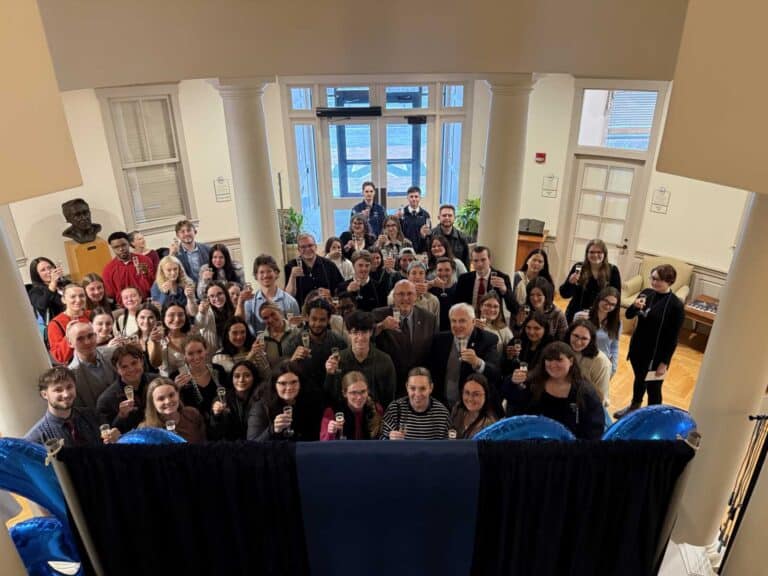
Students share stories at Libby Dedication

First-ever named professorship at Honors College created in honor of Bernard Lown (‘42)

Dr. Bernard Lown speaking

A new series of courses and lectures at the University of Maine will honor the life and legacy of Dr. Bernard Lown (‘42). A devout humanitarian, Lown applied principles of peace and kindness to his work as a world-renowned cardiologist and activist for nuclear disarmament. 

Through a gift of $273,000 from Lown’s three children — Anne, Fredric and Naomi Lown, the Dr. Bernard Lown ‘42 Honors College Teaching Professorship was established at the University of Maine Foundation as the first-ever named professorship in the Honors College. This endowed fund will support a UMaine faculty member working to advance and understand societal peace, health and justice in alignment with the lifelong commitments of Bernard Lown. The fund also provides the university with resources to recognize faculty members for their innovative teaching methods and creative activities.

“From the beginning, the Honors College has been a place for students to grow their knowledge, courage and passion,” said Ellen Weinauer, dean of the Honors College. “Dr. Lown found his love of science here and began thinking deeply about the world during his time in Honors. I’m grateful that Dr. Lown’s children have recognized the impact the Honors College had on their father in this way. The professorship established in Dr. Lown’s name will have a lasting impact on UMaine students, faculty and the Honors College.”

After a rigorous application and review process, Michael Haedicke, associate professor of sociology, was selected for the inaugural Dr. Bernard Lown ‘42 Honors College Teaching Professorship. 

Naomi, Fred and I were impressed with the diligence the Honors College displayed in selecting someone for this professorship,” Anne Lown said. “We were pleased that the six professors who applied were from a variety of disciplines, yet we could see the relevance to our father’s work and his values within all their fields of study.” 

An immigrant from Lithuania who moved to Lewiston in 1935, Lown invented the direct current defibrillator in 1962. Throughout his career as a cardiologist, his approach to patient care was personable and humanistic. By the end of his medical career, he had become critical of the way doctors were extending and taught to extend patient care — more procedural than personal.  

In the early ‘60s, as the threat of nuclear warfare became more prevalent during the Cold War, Lown founded Physicians for Social Responsibility. The group researched and published a paper in The New England Journal of Medicine that disproved the widely-held belief that bomb shelters could protect against nuclear war. It was one of 447 medical journal articles he authored and the beginning of work that would earn him a Nobel Peace Prize in 1985 alongside a Soviet cardiologist. 

Lown’s two-fold pursuit as a cardiologist and activist revolved around his concern for the state of the world and the issue of sudden death. He never sought fame or fortune, only to put his skill and knowledge toward the betterment of society. 

“Dr. Lown was not a sociologist, but the themes in his work and the passions that he pursued in his work are ones that connect with sociology,” Haedicke said. “Sociology is about how the choices that we make are shaped by our relationships with other people and the shared social world we live in. At the same time, sociology teaches us that we can shape that world, hopefully in positive ways.”

Haedicke’s term will begin in the fall and last through spring 2027. His first course as part of this professorship will begin in spring 2026 and is called “Making Care Public.” Students will explore meanings and practices of care in this diverse and social world, while also learning how to communicate their viewpoints. Class discussions will include topics such as the intricacies of caring for loved ones while balancing careers and empathizing with people who lack access to care.

“I applaud Professor Haedicke for designing a course that engages students in exploring how Dr. Lown used his passion for science to serve others,” said Joan Ferrini-Mundy, president of the University of Maine and its regional campus, the University of Maine at Machias. “His instruction will cultivate students’ scholarly inquiry, analytical reasoning and ability to synthesize complex ideas — capacities essential for advancing knowledge and addressing today’s most pressing challenges. I am grateful to Anne, Naomi and Fred for creating this professorship to honor their father’s remarkable legacy.”

“Making Care Public” is one of the Honors College’s Calderwood Seminar offerings. Like other Calderwood Seminars, the class will help students develop public writing and editing skills — while also exploring their own ideas, beliefs and values. Students will split into two groups and alternate between writing and editing the other group’s work. Ideally, by the end of the course, students will be able to present academic ideas, observations and data-based opinions to inform or persuade the public.

Karyn Sporer, an associate professor of sociology and faculty chair of UMaine’s Department of Sociology and Criminal Justice, said Haedicke has centered his classroom around his students and been a mentor to them since he joined their department in 2020. “He brings a rare combination of humility, insight and generosity to everything he does, and we are incredibly fortunate to have him as a colleague,” Sporer added. 

In the final semester of his endowment, spring 2027, Haedicke will deliver the first Bernard Lown Memorial Lecture, which will be open to the public.


Michael Haedicke portrait

UMaine alum establishes $2M fund to enrich students’ historical and political studies

Blaine Moores inducted into the Katahdin Society

University of Maine Foundation President/CEO Jeff Mills (left) and Associate Director Dee Gardner (right) presenting Blaine Moores (center) with his acceptance into the Foundation’s Katahdin Society during a meeting celebrating his tremendous gift.

ORONO, Maine: University of Maine alumnus Blaine Moores has donated $2 million to launch a symposium series that will bring nationally prominent figures to campus for presentations and classroom conversations on history and current affairs.

Moores, who earned a bachelor’s degree in history from UMaine in 1959 and a master’s degree in education in 1963, has established the Blaine D. Moores ’59, ’63G History Series Fund through the University of Maine Foundation. The fund will support the creation of a new symposium program, which will invite distinguished figures to speak on campus about historical and political topics, enhancing students’ academic experience and sparking dialogue.

The Moores series will include in-class visits by symposium presenters to history, political science and leadership studies courses. Reflecting Moores’ vision, the program aspires to attract presidential and political historians and analysts, as well as others whose insights and perspectives would engage students in wide-ranging subjects.

“I am deeply grateful to Blaine Moores for this remarkable and forward-thinking gift,” said Joan Ferrini-Mundy, president of the University of Maine and its regional campus, the University of Maine at Machias. “Thanks to his generous contribution, UMaine will be able to host nationally prominent campus speakers on historical and political topics, as well as in-class visits and related leadership studies courses.”

“Blaine understands the power of bringing history to life,” said Emily Haddad, dean of UMaine’s College of Liberal Arts and Sciences. “The Blaine D. Moores History Series will ensure that UMaine students and the entire community can learn from and be inspired by some of the most influential voices of our time. By providing a path from the national stage to the classroom, his gift will enable leading experts and national commentators to engage directly with our history students, as well as those in the related fields of international affairs, leadership studies and political science. This is a profoundly important investment in fostering generations of informed citizens and perceptive leaders.”

A native of Springfield, Maine, who now resides in Kennebunk, Moores has a long history of philanthropy with the UMaine Foundation. Beyond this newly established History Series Fund, Moores contributed to the Class of 1959 Scholarship Fund in 2016 ahead of their 60th reunion. Moores generously offered to match all gifts to the class scholarship, dollar for dollar, up to $50,000. As a result of Moores’ challenge, the fund’s balance jumped from $40,172 to more than $130,000, and currently sits at more than $153,000.

“Blaine has been a very loyal alumnus, who cares deeply about the future of the University of Maine and appreciates all that his education has provided for him over the years. His gift will provide a deeper connection to history for future Black Bears and expand their knowledge. We are grateful for Blaine’s leadership and generosity,” said Jeff Mills, the University of Maine Foundation’s president and CEO.

As a result of this gift, Moores was recently recognized at the Katahdin level of the university’s Stillwater Society, which honors donors of $1 million or more.

About the University of Maine Foundation: The University of Maine Foundation is dedicated to supporting the University of Maine by securing and managing private gifts to enhance the University’s mission of teaching, research, and public service. Through the generosity of alumni and friends, the Foundation strives to ensure the continued growth and success of the university.

About the University of Maine: As Maine’s only public research university and a Carnegie R1 top-tier research institution, the University of Maine advances learning and discovery through excellence and innovation. Founded in 1865 in Orono, UMaine is the state’s land, sea and space grant university with a regional campus at the University of Maine at Machias. Our students come from all over the world and work with faculty conducting fieldwork around the globe — from the North Atlantic to the Antarctic. Located on Marsh Island in the homeland of the Penobscot Nation with UMaine Machias located in the homeland of the Passamaquoddy Nation, UMaine’s statewide mission is to foster an environment that creates tomorrow’s leaders. As the state’s flagship institution, UMaine offers nearly 200 degree programs through which students can earn bachelor’s, master’s, professional master’s and doctoral degrees as well as graduate certificates. For more information about UMaine and UMaine Machias, visit umaine.edu/about/quick-facts and machias.edu/about-umm/umm-facts.