Libby’s Gift Provides Learning Space for the College of Education and Human Development

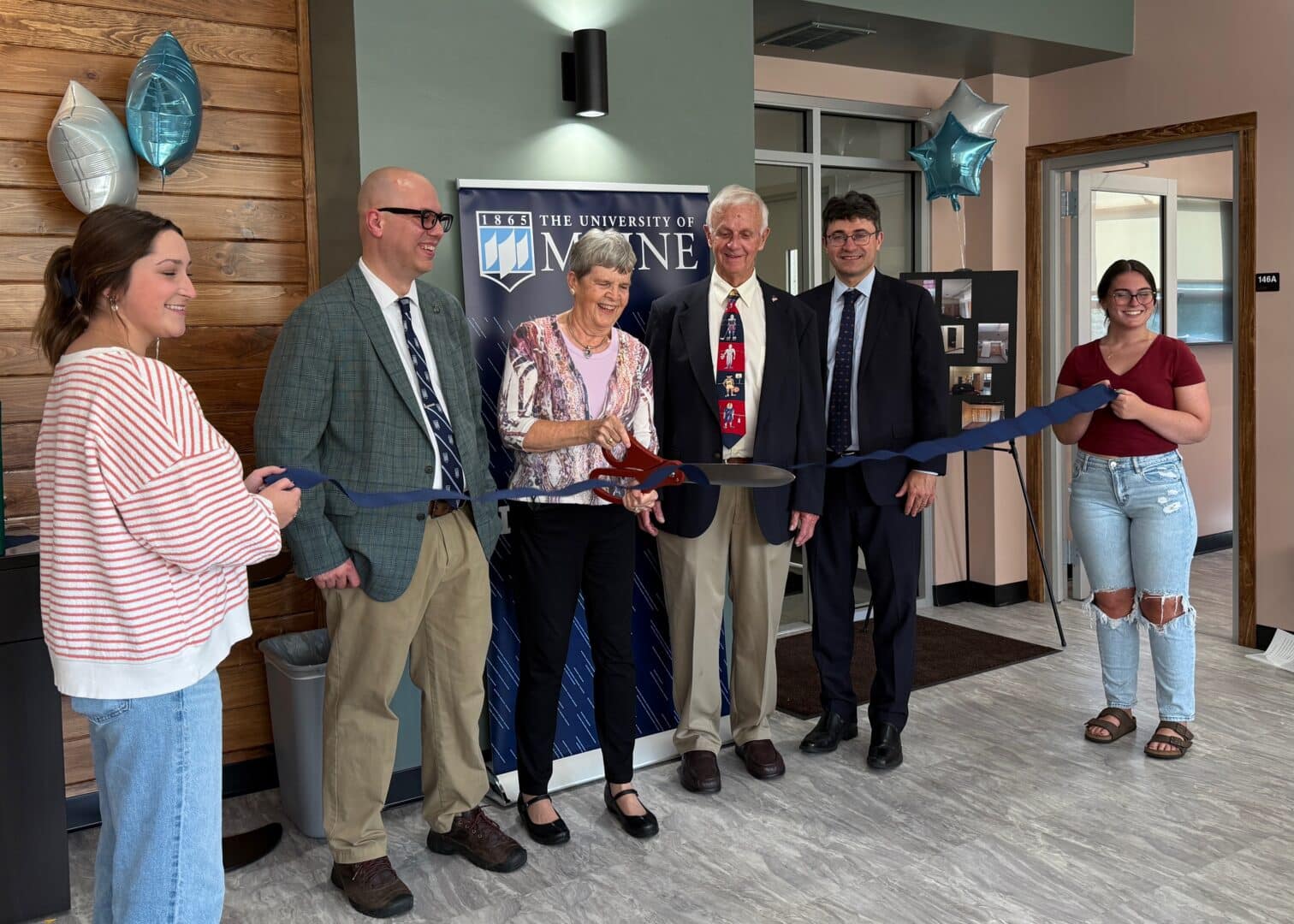
Libbys Learning Space Ribbon Cutting

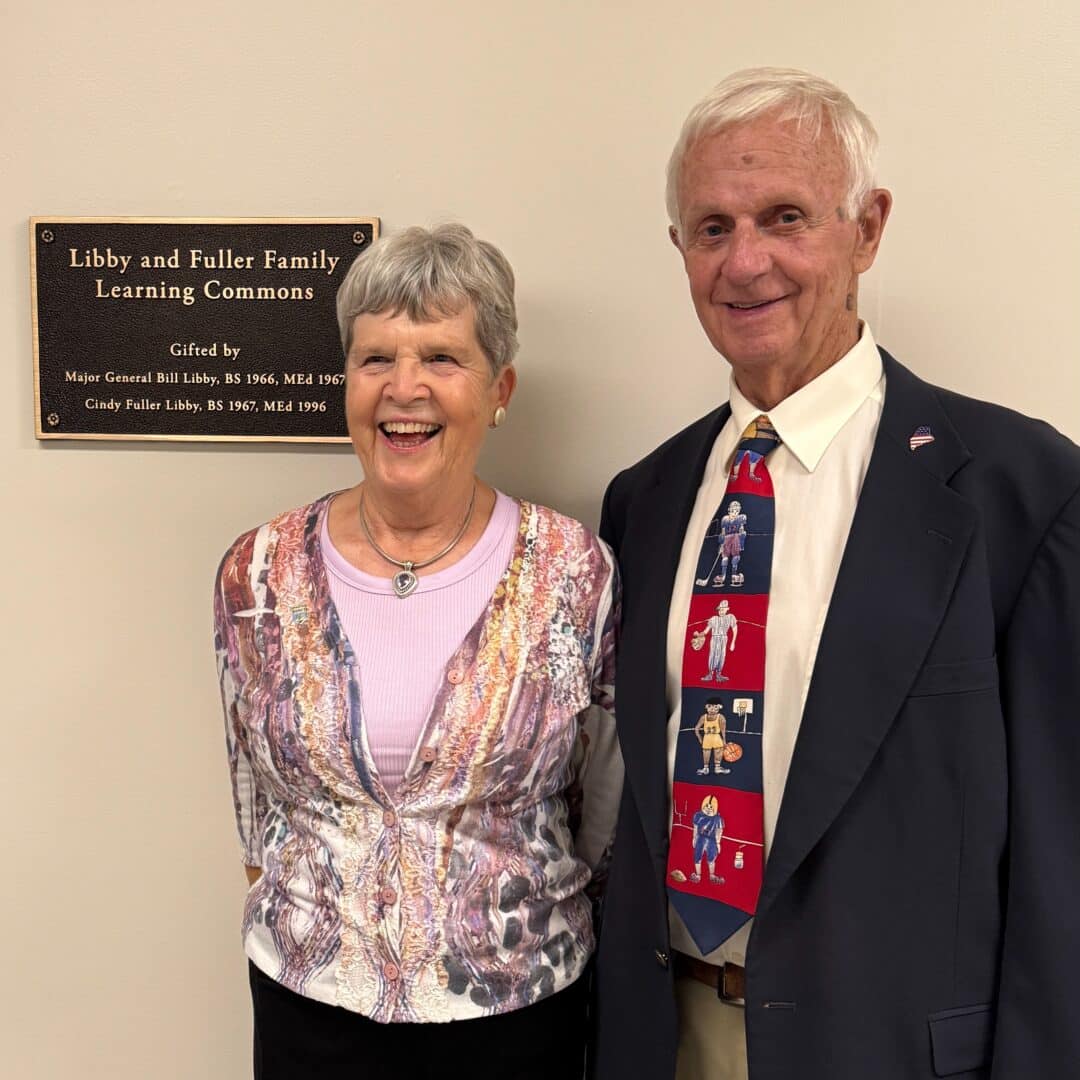
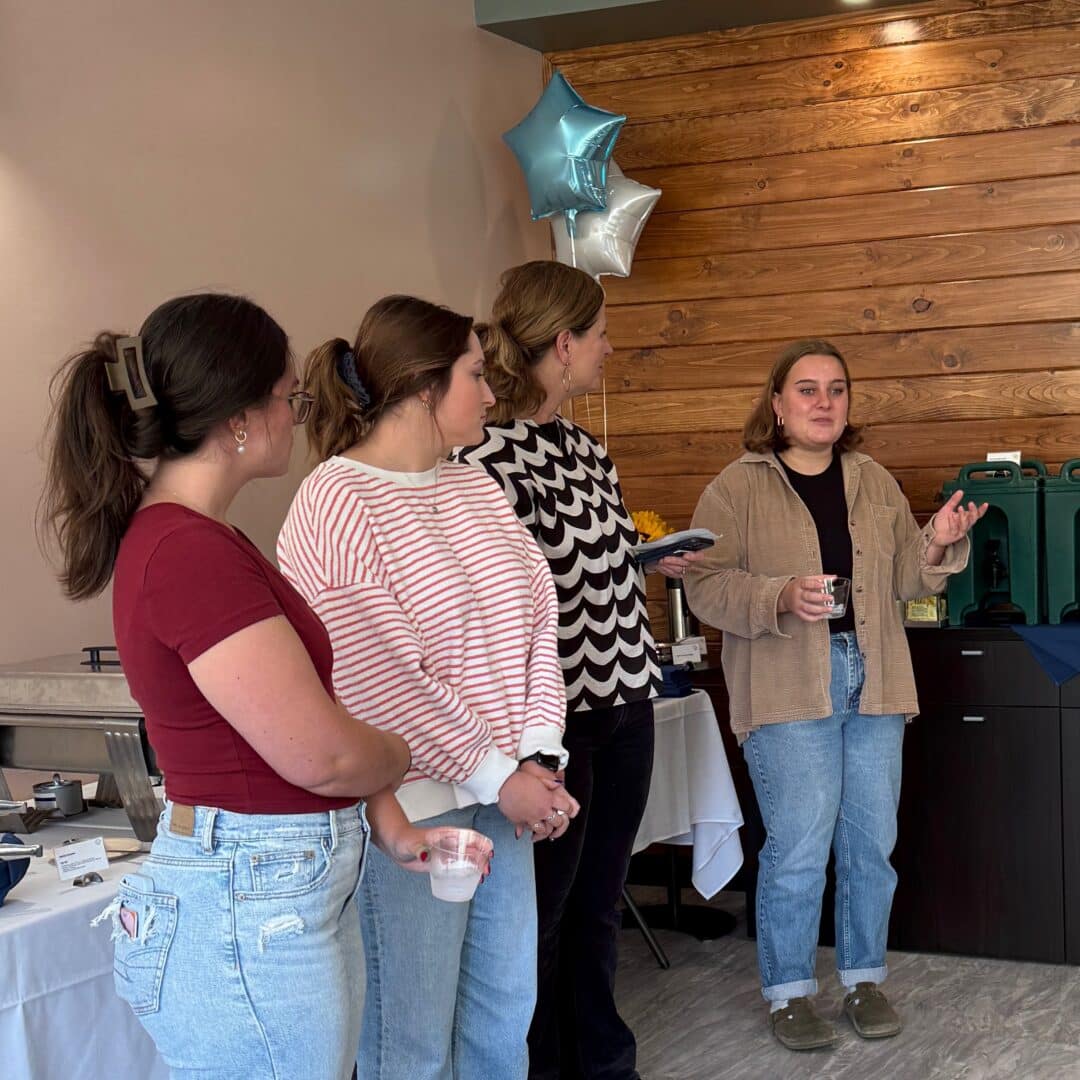
During Family and Friends Weekend on September 26, the College of Education and Human Development held a dedication ceremony honoring Major General (Retired) Bill Libby ’66, ’67G and Cindy Fuller Libby ’67, ’96G for their generous gift to create the Libby and Fuller Family Learning Commons on the first floor of Shibles Hall. Faculty, staff, and students were present to honor the gift and share stories of how they’ve been able to utilize and enjoy the new space.

The Libbys wanted their gift to transform a space into a “home” for students in the College of Education and Human Development, fostering community and support through a shared space that generations could enjoy.

Major General (Retired) Billy Libby was born and raised in Lewiston, Maine. After spending a year at West Point, he joined UMaine, where he completed his undergraduate and graduate degrees in education. While attending UMaine, he met his bride-to-be, Cindy Fuller, in the dining room of Stewart Commons, where Bill worked as a student.

Cindy was born and raised in Ellsworth and followed her family’s legacy of attending UMaine. She studied business administration. After a brief career in bookkeeping, she realized her passion was in counselor education and decided to pursue graduate school, having raised her three sons, Derek, Jeff, and Brad. 

Bill would later pursue a military career as an officer and earn his rank as Major General before retiring. Cindy would work as a school counselor until her retirement. While attending UMaine together, they discovered how much it meant to them and how it became a home, which fostered their relationship and contributed to their college success.

Libby Dedication
Students share stories at Libby Dedication

First-ever named professorship at Honors College created in honor of Bernard Lown (‘42)

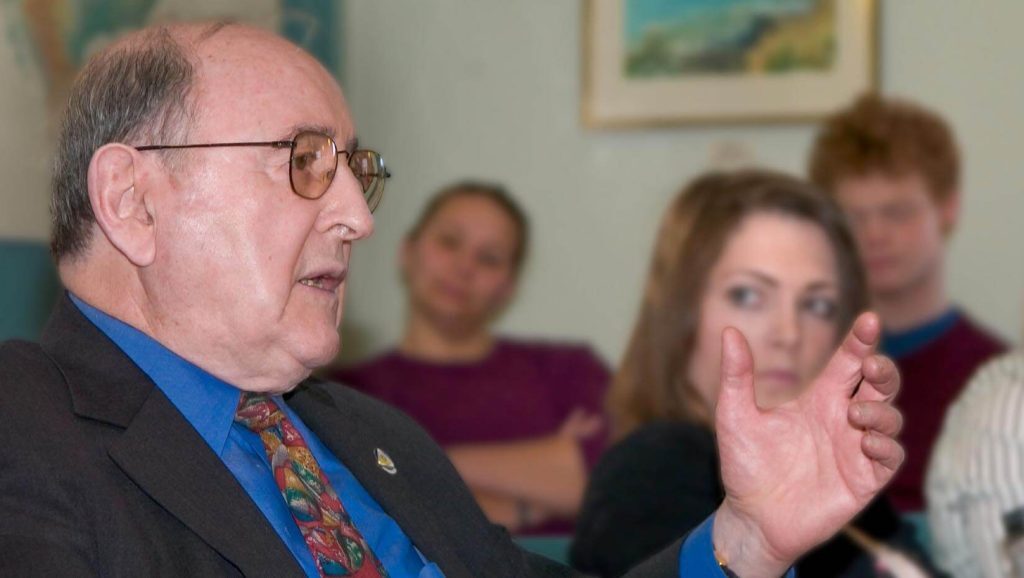
Dr. Bernard Lown speaking

A new series of courses and lectures at the University of Maine will honor the life and legacy of Dr. Bernard Lown (‘42). A devout humanitarian, Lown applied principles of peace and kindness to his work as a world-renowned cardiologist and activist for nuclear disarmament. 

Through a gift of $273,000 from Lown’s three children — Anne, Fredric and Naomi Lown, the Dr. Bernard Lown ‘42 Honors College Teaching Professorship was established at the University of Maine Foundation as the first-ever named professorship in the Honors College. This endowed fund will support a UMaine faculty member working to advance and understand societal peace, health and justice in alignment with the lifelong commitments of Bernard Lown. The fund also provides the university with resources to recognize faculty members for their innovative teaching methods and creative activities.

“From the beginning, the Honors College has been a place for students to grow their knowledge, courage and passion,” said Ellen Weinauer, dean of the Honors College. “Dr. Lown found his love of science here and began thinking deeply about the world during his time in Honors. I’m grateful that Dr. Lown’s children have recognized the impact the Honors College had on their father in this way. The professorship established in Dr. Lown’s name will have a lasting impact on UMaine students, faculty and the Honors College.”

After a rigorous application and review process, Michael Haedicke, associate professor of sociology, was selected for the inaugural Dr. Bernard Lown ‘42 Honors College Teaching Professorship. 

Naomi, Fred and I were impressed with the diligence the Honors College displayed in selecting someone for this professorship,” Anne Lown said. “We were pleased that the six professors who applied were from a variety of disciplines, yet we could see the relevance to our father’s work and his values within all their fields of study.” 

An immigrant from Lithuania who moved to Lewiston in 1935, Lown invented the direct current defibrillator in 1962. Throughout his career as a cardiologist, his approach to patient care was personable and humanistic. By the end of his medical career, he had become critical of the way doctors were extending and taught to extend patient care — more procedural than personal.  

In the early ‘60s, as the threat of nuclear warfare became more prevalent during the Cold War, Lown founded Physicians for Social Responsibility. The group researched and published a paper in The New England Journal of Medicine that disproved the widely-held belief that bomb shelters could protect against nuclear war. It was one of 447 medical journal articles he authored and the beginning of work that would earn him a Nobel Peace Prize in 1985 alongside a Soviet cardiologist. 

Lown’s two-fold pursuit as a cardiologist and activist revolved around his concern for the state of the world and the issue of sudden death. He never sought fame or fortune, only to put his skill and knowledge toward the betterment of society. 

“Dr. Lown was not a sociologist, but the themes in his work and the passions that he pursued in his work are ones that connect with sociology,” Haedicke said. “Sociology is about how the choices that we make are shaped by our relationships with other people and the shared social world we live in. At the same time, sociology teaches us that we can shape that world, hopefully in positive ways.”

Haedicke’s term will begin in the fall and last through spring 2027. His first course as part of this professorship will begin in spring 2026 and is called “Making Care Public.” Students will explore meanings and practices of care in this diverse and social world, while also learning how to communicate their viewpoints. Class discussions will include topics such as the intricacies of caring for loved ones while balancing careers and empathizing with people who lack access to care.

“I applaud Professor Haedicke for designing a course that engages students in exploring how Dr. Lown used his passion for science to serve others,” said Joan Ferrini-Mundy, president of the University of Maine and its regional campus, the University of Maine at Machias. “His instruction will cultivate students’ scholarly inquiry, analytical reasoning and ability to synthesize complex ideas — capacities essential for advancing knowledge and addressing today’s most pressing challenges. I am grateful to Anne, Naomi and Fred for creating this professorship to honor their father’s remarkable legacy.”

“Making Care Public” is one of the Honors College’s Calderwood Seminar offerings. Like other Calderwood Seminars, the class will help students develop public writing and editing skills — while also exploring their own ideas, beliefs and values. Students will split into two groups and alternate between writing and editing the other group’s work. Ideally, by the end of the course, students will be able to present academic ideas, observations and data-based opinions to inform or persuade the public.

Karyn Sporer, an associate professor of sociology and faculty chair of UMaine’s Department of Sociology and Criminal Justice, said Haedicke has centered his classroom around his students and been a mentor to them since he joined their department in 2020. “He brings a rare combination of humility, insight and generosity to everything he does, and we are incredibly fortunate to have him as a colleague,” Sporer added. 

In the final semester of his endowment, spring 2027, Haedicke will deliver the first Bernard Lown Memorial Lecture, which will be open to the public.

Michael Haedicke portrait

UMaine alum establishes $2M fund to enrich students’ historical and political studies

Blaine Moores inducted into the Katahdin Society

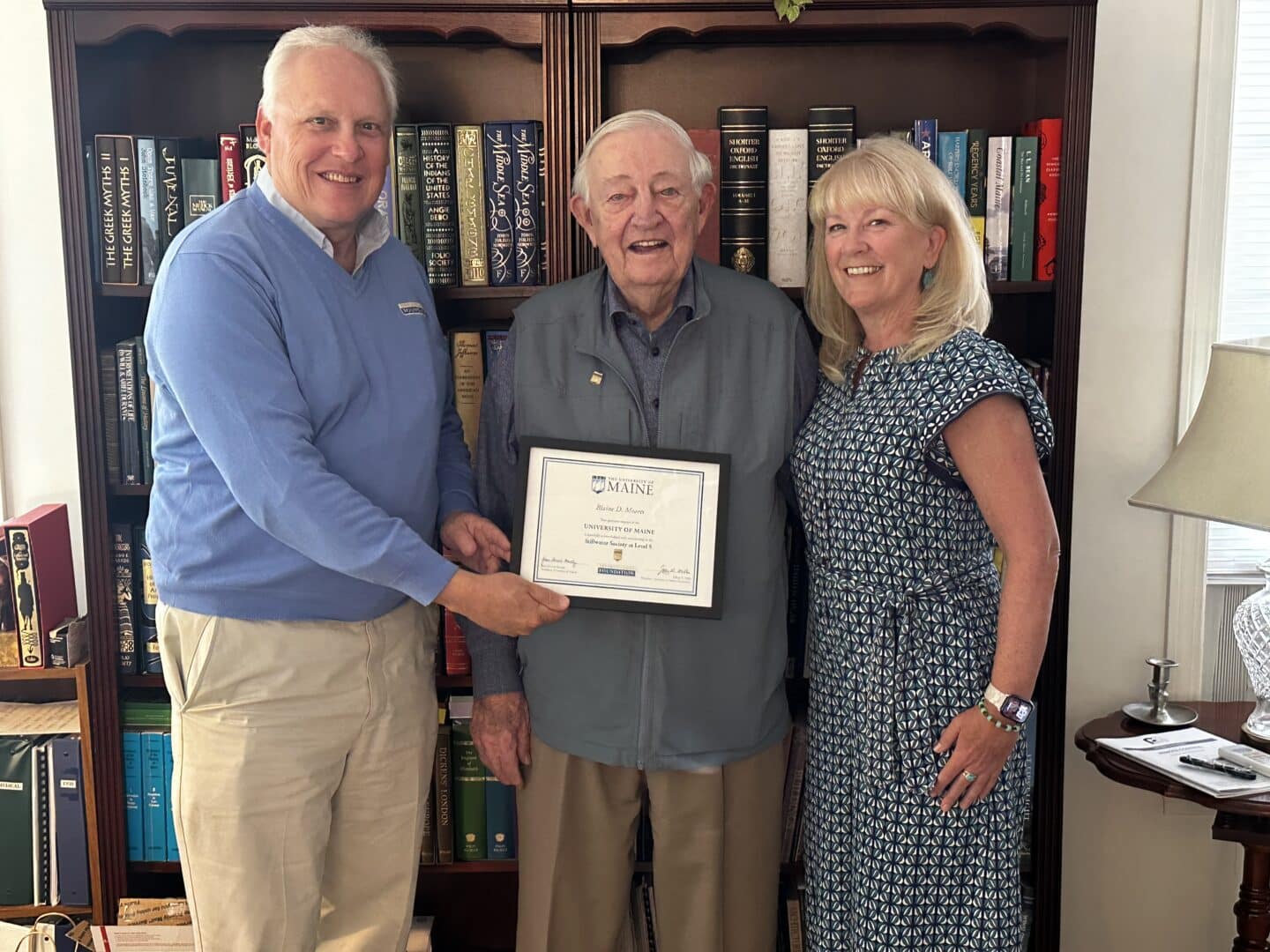
University of Maine Foundation President/CEO Jeff Mills (left) and Associate Director Dee Gardner (right) presenting Blaine Moores (center) with his acceptance into the Foundation’s Katahdin Society during a meeting celebrating his tremendous gift.

ORONO, Maine: University of Maine alumnus Blaine Moores has donated $2 million to launch a symposium series that will bring nationally prominent figures to campus for presentations and classroom conversations on history and current affairs.

Moores, who earned a bachelor’s degree in history from UMaine in 1959 and a master’s degree in education in 1963, has established the Blaine D. Moores ’59, ’63G History Series Fund through the University of Maine Foundation. The fund will support the creation of a new symposium program, which will invite distinguished figures to speak on campus about historical and political topics, enhancing students’ academic experience and sparking dialogue.

The Moores series will include in-class visits by symposium presenters to history, political science and leadership studies courses. Reflecting Moores’ vision, the program aspires to attract presidential and political historians and analysts, as well as others whose insights and perspectives would engage students in wide-ranging subjects.

“I am deeply grateful to Blaine Moores for this remarkable and forward-thinking gift,” said Joan Ferrini-Mundy, president of the University of Maine and its regional campus, the University of Maine at Machias. “Thanks to his generous contribution, UMaine will be able to host nationally prominent campus speakers on historical and political topics, as well as in-class visits and related leadership studies courses.”

“Blaine understands the power of bringing history to life,” said Emily Haddad, dean of UMaine’s College of Liberal Arts and Sciences. “The Blaine D. Moores History Series will ensure that UMaine students and the entire community can learn from and be inspired by some of the most influential voices of our time. By providing a path from the national stage to the classroom, his gift will enable leading experts and national commentators to engage directly with our history students, as well as those in the related fields of international affairs, leadership studies and political science. This is a profoundly important investment in fostering generations of informed citizens and perceptive leaders.”

A native of Springfield, Maine, who now resides in Kennebunk, Moores has a long history of philanthropy with the UMaine Foundation. Beyond this newly established History Series Fund, Moores contributed to the Class of 1959 Scholarship Fund in 2016 ahead of their 60th reunion. Moores generously offered to match all gifts to the class scholarship, dollar for dollar, up to $50,000. As a result of Moores’ challenge, the fund’s balance jumped from $40,172 to more than $130,000, and currently sits at more than $153,000.

“Blaine has been a very loyal alumnus, who cares deeply about the future of the University of Maine and appreciates all that his education has provided for him over the years. His gift will provide a deeper connection to history for future Black Bears and expand their knowledge. We are grateful for Blaine’s leadership and generosity,” said Jeff Mills, the University of Maine Foundation’s president and CEO.

As a result of this gift, Moores was recently recognized at the Katahdin level of the university’s Stillwater Society, which honors donors of $1 million or more.

About the University of Maine Foundation: The University of Maine Foundation is dedicated to supporting the University of Maine by securing and managing private gifts to enhance the University’s mission of teaching, research, and public service. Through the generosity of alumni and friends, the Foundation strives to ensure the continued growth and success of the university.

About the University of Maine: As Maine’s only public research university and a Carnegie R1 top-tier research institution, the University of Maine advances learning and discovery through excellence and innovation. Founded in 1865 in Orono, UMaine is the state’s land, sea and space grant university with a regional campus at the University of Maine at Machias. Our students come from all over the world and work with faculty conducting fieldwork around the globe — from the North Atlantic to the Antarctic. Located on Marsh Island in the homeland of the Penobscot Nation with UMaine Machias located in the homeland of the Passamaquoddy Nation, UMaine’s statewide mission is to foster an environment that creates tomorrow’s leaders. As the state’s flagship institution, UMaine offers nearly 200 degree programs through which students can earn bachelor’s, master’s, professional master’s and doctoral degrees as well as graduate certificates. For more information about UMaine and UMaine Machias, visit umaine.edu/about/quick-facts and machias.edu/about-umm/umm-facts.

Senator Collins Speaks at Inaugural Patricia and Donald Collins Leadership Award Presentation at UMaine

Senator Susan Collins and Keegan Tripp

Senator Susan Collins and Keegan Tripp. Photo: UMaine Marketing

Orono, ME – On April 18, U.S. Senator Susan Collins delivered remarks at the inaugural Patricia M. and Donald F. Collins Leadership Award ceremony at the University of Maine (UMaine). This endowed scholarship award was established in memory of Patricia and Donald Collins, both Class of 1949 graduates of UMaine, former mayors of the City of Caribou, and the parents of six children, including Senator Collins. Patricia Collins also served as the first female chair of the UMaine System Board of Trustees, the Catholic Charities of Maine Board of Directors, and the Catholic Foundation of Maine Board of Trustees. Donald Collins was a Bronze Star and two-time Purple Heart recipient as an infantry sergeant during the Battle of the Bulge in World War II, and later served as a member of the Maine State House of Representatives and the Maine State Senate.

The inaugural recipient of the award is Keegan Tripp, a member of the University of Maine Class of 2026. Keegan is the President of the University of Maine Student Government, a board member of the University of Maine Alumni Association, and a recipient of the John M. Nickerson Scholarship for political science students who have demonstrated exceptional academic achievement. Keegan also interned at Senator Collins’ state office in Bangor.

“My parents believed deeply in the value of education, civic responsibility, and giving back to their community, and they exemplified those principles throughout their lives,” said Senator Collins. “It is incredibly meaningful to honor their legacy through this endowed scholarship. I know that they too would be proud of Keegan, whose leadership, character, and outstanding academic achievements made him an excellent candidate to be the first-ever recipient of this award.”

Engineering Scholarship Established in Memory of UMaine Alum Major General Robert Rushworth

Pictured: NASA’s X-15 Test Pilots, From left to right: USAF Capt. Joe Engle, USAF Maj. Robert Rushworth, NASA test pilot John “Jack” McKay, USAF Maj. William “Pete” Knight, NASA test pilot Milton Thompson, and NASA test pilot William. Photo: NASA.

ORONO, MAINE: The Major General Robert A. Rushworth Scholarship fund was recently established at the University of Maine Foundation in honor of the late International Space Hall of Fame inductee Major General Robert A. Rushworth. The fund will provide financial assistance to University of Maine, Orono students enrolled in any engineering discipline. This fund was created through a gift from William G. “Bill” Weppner, Major, United States Air Force (Retired) of Memphis, Tennessee, in honor of Rushworth, who made a life-changing impact on Bill’s own Air Force career.

Originally from Madison, Maine, Robert Rushworth served in the Army Air Force during WWII before arriving at the University of Maine, completing a B.S. in Mechanical Engineering in 1951. After obtaining an M.S. in Aeronautical-Mechanical Engineering from the Air Force Institute of Technology, Bob became an Air Force command pilot, serving in Vietnam with 189 missions as a fighter wing commander. On General Rushworth, Weppner remembers “he flew anything with wings, up to the North American X-15 rocket, which didn’t have wings.” The X-15, a rocket-powered spacecraft developed by NASA in the 1950s, was the first piloted plane to reach hypersonic speeds (five times the speed of sound). In 1963, General Rushworth, a test pilot and primary pilot of the X-15, ventured four miles out of the earth’s atmosphere in the craft, earning him the rank of Air Force astronaut and a place of honor alongside the Mercury Seven Astronauts.

General Rushworth served briefly as Inspector General, Air Force Systems Command, followed by Commander of the Air Force Flight Test Center at Edwards Air Force Base in California before retiring in 1981 as Vice Commander, Aeronautical Systems Division, Air Force Systems Command at Wright-Patterson Air Force Base in Dayton, Ohio. His decorations include the Legion of Merit, the Distinguished Flying Cross with two oak leaf clusters, the Air Medal with ten clusters, Air Force Commendation Medal, and the NASA Exceptional Service Medal among many other awards. He was inducted into the National Aviation Hall of Fame alongside Charles Lindbergh, Chuck Yeager, John Glenn, and the Wright Brothers; and enshrined in the International Space Hall of Fame for his service with the X-15.

This scholarship will further General Rushworth’s legacy, inspiring the next generation of leaders and innovators at the University of Maine in engineering.

Interested in establishing your own scholarship at the University of Maine Foundation? Funding a scholarship for UMaine students through the Foundation may be accomplished by making current gifts of cash, stock, land or personal property, or a deferred gift through a charitable trust, gift annuity, pooled life income fund or bequest. Learn more about connecting your legacy to UMaine’s future at How to Establish a FundUniversity of Maine Foundationhttps://umainefoundation.org › how-to-establish-a-fund 

About the University of Maine Foundation:The University of Maine Foundation is dedicated to supporting the University of Maine by securing and managing private gifts to enhance the University’s mission of teaching, research, and public service. Through the generosity of alumni and friends, the Foundation strives to ensure the continued growth and success of the university.

About the University of Maine: As Maine’s only public research university and a Carnegie R1 top-tier research institution, the University of Maine advances learning and discovery through excellence and innovation. Founded in 1865 in Orono, UMaine is the state’s land, sea and space grant university with a regional campus at the University of Maine at Machias. Our students come from all over the world and work with faculty conducting fieldwork around the globe — from the North Atlantic to the Antarctic. Located on Marsh Island in the homeland of the Penobscot Nation with UMaine Machias located in the homeland of the Passamaquoddy Nation, UMaine’s statewide mission is to foster an environment that creates tomorrow’s leaders. As the state’s flagship institution, UMaine offers nearly 200 degree programs through which students can earn bachelor’s, master’s, professional master’s and doctoral degrees as well as graduate certificates. For more information about UMaine and UMaine Machias, visit umaine.edu/about/quick-facts and machias.edu/about-umm/umm-facts.

UMaine Navy ROTC Midshipmen donate funds from Warrior Run to support Veterans’ Causes

Pictured: Philanthropy Officer Hannah Young accepted the check from Midshipman 3/C Benjamin Rider on behalf of the University of Maine Foundation. Accompanied by Captain Joseph Hendron, Lieutenant Henry Oberman, and Gunnery Sargeant Patrick K. Armstrong

ORONO, MAINE: The University of Maine’s NROTC program has once again demonstrated its commitment to honoring and supporting veterans by donating funds raised through its annual Warrior Trek fundraiser. This year, the students chose to support two meaningful causes: The Summit Project and the Captain Kenneth C. Motsay, USMC, Memorial NROTC Award.

The Warrior Trek, an endurance event organized by NROTC midshipmen, took place on the university’s logging trails74 runners from the Army ROTC and Navy ROTC participated in the challenging course. The event serves as both a tribute to military service members and a way to give back to the community. Proceeds from the run help fund initiatives that support veterans, their families, and the legacy of fallen service members.

Runners carried a stone with the name of Captain Kenneth C. Motsay, as part of The Summit Project, which honors Maine’s fallen heroes by preserving their memories through tribute hikes and community engagement.

The Captain Kenneth C. Motsay, USMC, Memorial NROTC Award, was established in 2024 at the University of Maine Foundation by Captain Motsay’s parents, Charles and Sandra Motsay. This award honors Captain Motsay’s dedication to his midshipmen, his tireless work ethic, and his exceptional nine years of military service. It is given annually to recognize leadership and commitment among future Navy and Marine Corps officers—values that reflect the honor, courage, and commitment that define the United States Marine Corps.

During a special presentation, Benjamin Rider, a dedicated NROTC cadet, presented the donation of $2,137 to Hannah Young, Philanthropy Officer at the University of Maine Foundation. Rider played a key role in the fundraiser’s success, personally raising the most money among participants. Benjamin noted that Michael E. Garcia ran the longest distance at 32 miles. Their leadership and commitment exemplify the spirit of the Warrior Run and the NROTC program’s mission to give back to the community.

Through their efforts, the University of Maine NROTC continues to make a meaningful impact, ensuring that the sacrifices of service members are remembered and honored while also supporting the next generation of military leaders.

About the University of Maine Foundation: The University of Maine Foundation is dedicated to supporting the University of Maine by securing and managing private gifts to enhance the University’s mission of teaching, research, and public service. Through the generosity of alumni and friends, the Foundation strives to ensure the continued growth and success of the university.

About the University of Maine: As Maine’s only public research university and a Carnegie R1 top-tier research institution, the University of Maine advances learning and discovery through excellence and innovation. Founded in 1865 in Orono, UMaine is the state’s land, sea and space grant university with a regional campus at the University of Maine at Machias. Our students come from all over the world and work with faculty conducting fieldwork around the globe – from the North Atlantic to the Antarctic. Located on Marsh Island in the homeland of the Penobscot Nation with UMaine Machias located in the homeland of the Passamaquoddy Nation, UMaine’s statewide mission is to foster an enivronment that creates tomorrow’s leaders. As the state’s flagship institution, UMaine offers nearly 200 degree programs through which students can earn bachelor’s, master’s, professional master’s and doctoral degrees as well as graduate certificates. For more information about UMaine and UMaine Machias, visit umaine.edu/about/quick-facts and machias.edu/about-umm/umm-facts.