Tallest American chestnut tree in North America discovered on Foundation property

klementovich20151202-UMaine Foundation tallest American chestnut

Joe Klementovich, 2015

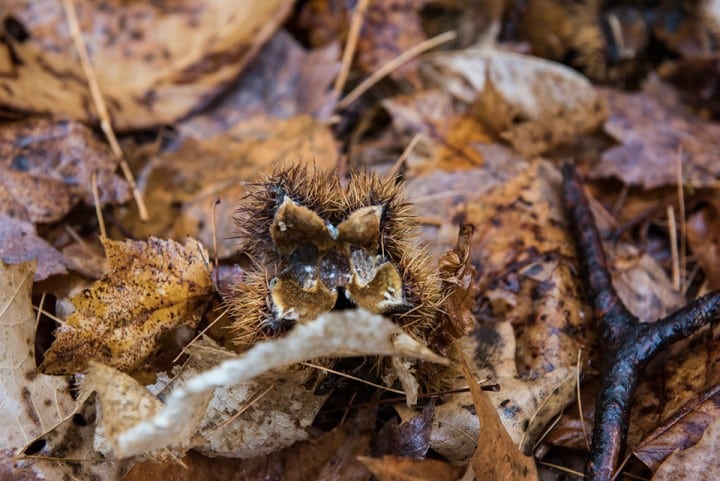
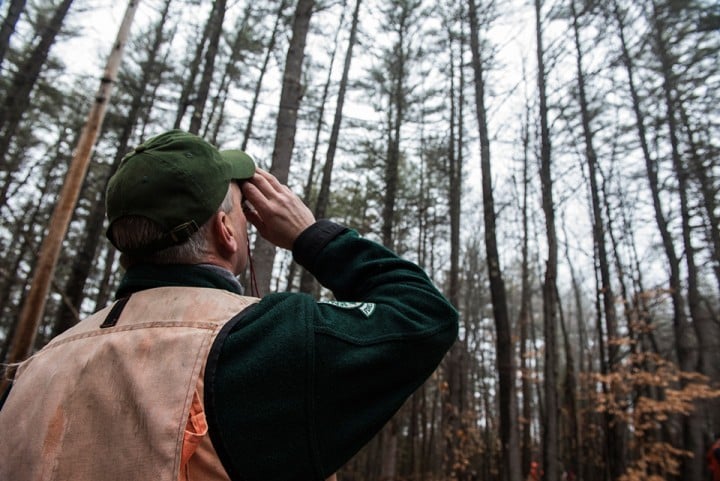
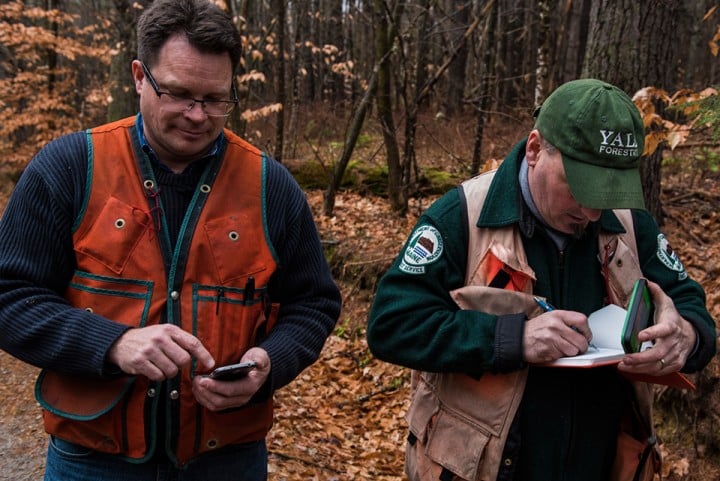
Foresters with the Maine Forest Service and the University of Maine have measured what is believed to be the tallest American chestnut (Castanea dentata) tree in North America, exceeding the next tallest known tree by 20 feet in height.  The 115-foot-tall tree is growing on land in Lovell, Me. that was bequeathed to the University of Maine Foundation. Prior to donating it to the University Foundation, the Volk family owned the property for more than 100 years. Douglas Volk (23 February 1856 – 1935) was a famous American portrait and landscape painter with works found in most American collections. Now, the property is home to an artist colony which houses many artists during the summer months.

It is estimated that there are only a few dozen large surviving trees such as this one left in the Maine woods. The American Chestnut Foundation (TACF)  is racing to discover what few remaining native American chestnut trees still exist in an effort to conserve American chestnut tree genetics, and to learn about the soils and forest conditions in which they are growing. The Maine Chapter of The American Chestnut Foundation has partnered with the Barbara Wheatland Geospatial Analysis Laboratory at the University of Maine to use remote sensing from airplanes to help locate unknown trees such as this one.

An official measurement of the tree took place on Dec. 2, 2015. TACF President and CEO Lisa Thomson, TACF Geneticist Dr. Jared Westbrook, University of Maine Forest Scientist Dr. Brian Roth, along with representatives from the Maine Forest Service and Dan Willett from the University of Maine Foundation were present for interviews and to answer questions.

Once the mighty giants of the eastern forest, American chestnut trees stood up to 100 feet tall, and numbered in the billions from Maine to Georgia. In the beginning of the 20th century the fungal pathogen responsible for chestnut blight was accidentally imported into the U.S. from Asia and spread rapidly. By 1950 the fungus had eliminated the American chestnut as a mature forest tree. In 1983, a group of scientists and laymen decided to do something about this ecological disaster while the species could still be saved. They formed The American Chestnut Foundation and initiated a complex breeding program to transfer genes containing disease resistance from Asian chestnut species to American chestnut.

klementovich20151202-Chestnut

Joe Klementovich, 2015

klementovich20151202-American chestnut trunk

Joe Klementovich, 2015

klementovich20151202-American chestnut measurement

Joe Klementovich, 2015

klementovich20151202-American chestnut notes

Joe Klementovich, 2015

CONTACTS:

Ruth Gregory Goodridge, Director of Communications, The American Chestnut Foundation, 50 North Merrimon Avenue, Suite 115, Asheville, NC  28804. 828-281-0047, ext. 305. ruth@acf.org

Brian Roth, University of Maine, School of Forest Resources
(207) 944-1392. brian.roth@maine.edu

Lincoln David Michaud Memorial Scholarship Fund recognized at Bridgton Academy

 *Editor’s Note: this story was originally published in the December publication of Bridgton Academy Today, and the University of Maine Foundation has been given special permission to re-publish this story on our website.


unnamedMemory of Class of ’60 Alumnus Honored Through Creation of New Scholarship at The University of Maine

As a student at Bridgton Academy, Lincoln David Michaud ’60, inspired not only his fellow classmates, but the community at large when he would launch his canoe in nearby Harrison and paddle across the lake to attend classes at Bridgton Academy.  His dedication to his education did not stop at the shores of Long Lake, however.  Once on campus, Lincoln worked tirelessly on his studies; always mindful of the value of his education.  Prior to his graduation from the Academy, Lincoln even penned the 1960 ‘Class Ode’ – offering a tribute to the school he so cherished. Lincoln David Michaud

More than half a century later, Lincoln’s dedication to Bridgton Academy endures through the creation of The Lincoln David Michaud Scholarship Fund  at The University of Maine, established in his memory by his sister, Lola Orcutt, through the University of Maine Foundation.

Coming from a very modest background as one of ten children, Lincoln recognized that he was lucky to study at Bridgton Academy.  The opportunity he had to learn and grow on this campus for more than two years was one he considered to be a privilege.  The lessons Lincoln learned on our humble campus on the hill in North Bridgton went on to serve him for the rest of his life, and helped formulate the work ethic that became synonymous with his name.   While at Bridgton, Lincoln immersed himself in extracurricular activities, including cross-country, Student Council and the Gold Key Club.  Lincoln’s love of music also found him as a member of Bridgton’s Glee Club and Barbershop Quartet.

After graduating from Bridgton, Lincoln went on to serve his country in the U.S. Army, stationed in Ethiopia as a Morse Code Interceptor.  Lincoln returned to Maine after his honorable discharge from the service where he worked as a carpenter and Maine Guide, and helped to support his mother and younger siblings.  Eventually, Lincoln found his way to New Mexico where he purchased a small pecan farm in Mesilla Park.  He became a regular at local farmers’ markets in the Las Cruces and Mesilla area.  He later became involved in the organization of the farmers’ market vendors and was on the board of the Farmers’ and Crafts Market of Las Cruces.  Lincoln became a respected face in his adopted town – known for building homes, his delicious pecans, impressive photography and, most of all, “as someone who would give you the shirt off his back, if you wanted or needed it,” according to the Las Crucens who knew him best.

Lincoln Michaud PoemEarlier this year, on March 29th, Lincoln passed away tragically due to injuries sustained in an automobile accident.  Shortly after his death, Lola Orcutt, the youngest of Lincoln’s nine siblings, created the Lincoln David Michaud Scholarship Fund at The University of Maine in memory of her brother.  “I know the value of the enduring memory a scholarship leaves behind,” stated Lola.  In honor of her brother’s love for the outdoors, his drive and determination to succeed in the face of adversity, and his admirable work ethic, this scholarship will be awarded to a deserving Bridgton Academy graduate who demonstrates financial need, and chooses to pursue his studies at the College of Natural Sciences, Forestry and Agriculture at The University of Maine.

The entire Bridgton Academy community wishes to extend its heartfelt gratitude to Lola Orcutt for honoring the memory of her beloved brother and creating a lasting partnership between the Academy and The University of Maine through the establishment of this fund.


UMaine Black Bear license plates program raises more than $1 million for scholarships

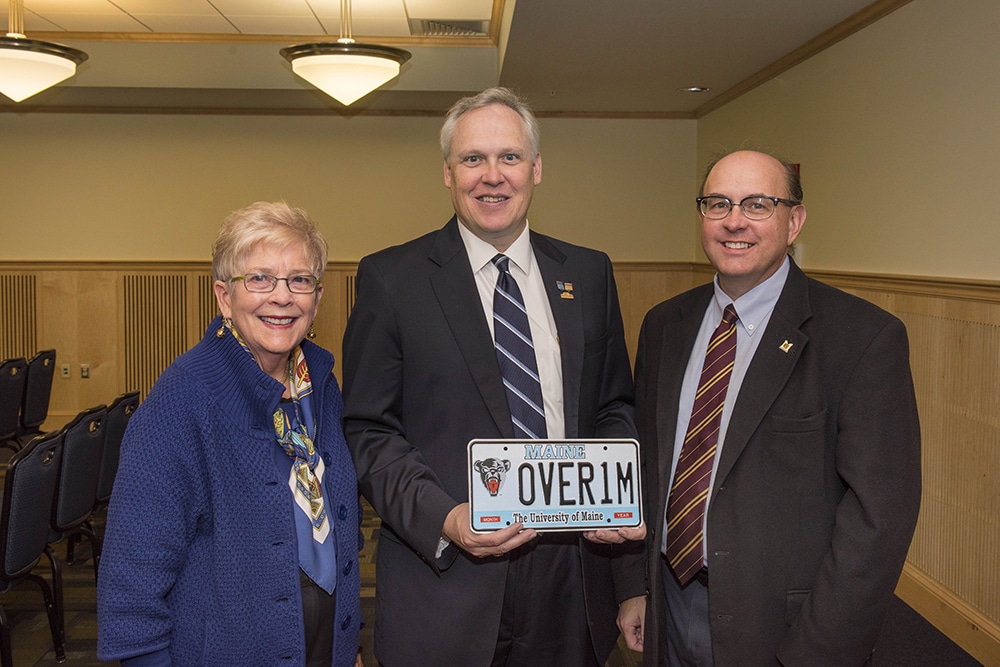
Black Bear Plate AnnouncementThe University of Maine Black Bear license plate program has raised more than $1 million for scholarships to support UMaine students, according to University of Maine Foundation President Jeffery Mills.

Mills made the announcement at the University of Maine Foundation’s annual meeting and luncheon Oct. 16 on campus.

Mills presented commemorative plaques to the Hon. Mary Cathcart for her involvement in the creation of the plate as the original bill sponsor in the Maine Legislature, and to Secretary of State Matthew Dunlap for his continued support of the program.

Mills also thanked the Hon. William O’Gara, who was unable to attend, for his support as the committee chair who sponsored the final bill that created the commemorative license plate.

The Black Bear license plate became available in Maine in 2003.

“People often look at the foundation and think that you have to have wealth in order to make a difference in the support of our programs. This project proves that you can make a difference at any level,” says Mills. “Along with the scholarship support, we are providing an additional way to show our Black Bear pride.”

The initial fee for a Black Bear license plate is $20. Renewals are $15, of which $10 supports the UMaine general scholarship fund. New UMaine students receive a voucher covering the initial cost of a Black Bear plate.

More information about the Black Bear license plate program is online (maine.gov/sos/bmv/registration/bbplate.html).

Support for UMaine Research & Development

13723307014_0ae1e4ec66_oSM

A Republican and Democrat agree: Strong UMaine strengthens state’s future

By Richard A. Bennett and Mary Cathcart

This year we celebrate the University of Maine’s 150th birthday. At the end of the Civil War, our state, like many others, received support from the federal government to establish a public university dedicated to the ideal that all qualified young people should have affordable access to a high-quality college education.

This development was remarkable in two ways. This marked the first time here or in Europe that higher education was opened to smart young people with limited means. Previously, most university students came from privileged families. Second, President Abraham Lincoln and Congress passed the enabling legislation during the Civil War, when even they could not be sure that the Union would endure. The Maine Legislature then passed the bill creating the University of Maine on Feb. 24, 1865, and Gov. Samuel Cony signed the bill the following day.

We are pleased that Gov. Paul LePage, in his new budget, has included increased support for the University of Maine System, and in particular for the Maine Economic Improvement Fund, which was formed to increase the ability of University of Maine researchers to compete for external grants and contracts. Strong regional economies across the country almost always have powerful research universities as the driver for innovation and job creation. Many other states have long invested in their universities so that their researchers are able to compete for nearly $30 billion in federal funds that are distributed annually, mostly through a tough, competitive, national process. Most states made those key investments in the years just after World War II. Maine was one of the last states to invest in its research infrastructure, beginning less than 20 years ago.

The two of us are proud to have worked together back in the late 1990s as the Maine Legislature undertook a strongly bipartisan initiative to change that. We had the honor of being appointed by Senate President Mark Lawrence as the bipartisan co-chairs of a Select Committee on research and development. Our committee reported back to the Legislature in early 1998 with recommendations for legislation designed to help the University of Maine become a legitimate competitor for the research funds. Among other things, that legislation established the Maine Economic Improvement Fund, which has been crucial in allowing University of Maine researchers to compete. (Maine Economic Improvement Fund funds are not used directly for research. Instead, they ensure the institutional infrastructure and sometimes matching funds needed to compete successfully in the national grants programs.)

This Maine Economic Improvement Fund is the same fund to which LePage has proposed additional funding for each of the next two years.

Have the investments made since about 2000 been helpful in making the University of Maine more competitive? The answer is a resounding yes. It would be an understatement to say that our select committee would have been thrilled to know that such large changes could take place so rapidly.

In the past 15 years, annual research activity at the University of Maine, as measured by the National Science Foundation, has increased by a factor of five, from about $25 million to nearly $120 million, putting the University of Maine in the top 100 of public research universities. Within the next year or two, researchers in Orono will have earned a total of $1 billion in outside grants and contracts since 2002. That is 10 times what the state has put toward that effort. Innovative ideas from University of Maine researchers have led to nearly 150 patents; those normally take about a decade to lead to results in the marketplace, but the process is finally underway. University of Maine faculty and students have worked with hundreds of Maine businesses to help develop new manufacturing processes and products. University of Maine researchers have succeeded in earning federal grants most years at rate of five to eight times the Maine Economic Improvement Fund funds leveraged, so the state investments have paid handsomely.

And, just as important, students in classes at Orono are being taught by professors who are national leaders in their disciplines, and who are bringing the very latest advances to the classroom. Furthermore, many of those students are involved in research with world-class faculty members. As a result, graduates of the University of Maine are highly competitive for professional careers of their choice in the various high-tech industries — from advanced manufacturing and advanced composites, to the life sciences and marine biology, and many others.

A recent study in Massachusetts concluded that our neighboring state would have a shortage of 60,000 highly educated tech workers by 2025, and that even today, the state is short at least 5,000 workers in computer science and information technology. Obviously, Maine cannot depend on other states to supply our needs in science and technology.

But we can compete. Let’s not let the other states have all of the research funds distributed to our nation’s university researchers. In fact, University of Maine researchers have a success rate of about 35 percent for proposals submitted to the National Science Foundation. The national average is less than 10 percent, so we can be very proud of the Maine successes. As the governor’s proposal recognizes, we need to keep increasing our capacity to compete if we are to deliver on the promise of prosperity and opportunity that is knocking at Maine’s door.

Hon. Mary Cathcart, a Democrat from Orono, served in the Maine Senate from 1996-2004 and in the Maine House from 1988-94. In 2013, she was inducted into the Maine Women’s Hall of Fame. Hon. Richard A. Bennett, a Republican from Oxford, served in the Maine Senate from 1996-2004, including a term as Senate president, and in the Maine House from 1990-94. He is chairman of the Maine Republican Party.

Originally published in the Bangor Daily News

Mill Anthology Project Receives Grant

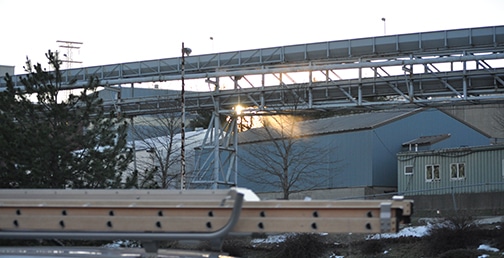
The sun sets on the last shift at the Verso paper mill in Bucksport. December 4, 2014. Photo by Ernie Smith

Bucksport Poet Laureate Pat Ranzoni has been awarded a $1,000 grant from the SpiritWords Fund of the University of Maine Foundation to support her proposal for an anthology titled STILL MILL, Poems, Stories & Songs of Making Paper in Bucksport, Maine, 19302014. The grant will help fund the cost of the book’s publication and distribution. Ranzoni will compile and edit the collection without compensation as a gift to her hometown. Proceeds from the book beyond the costs of production and marketing will be donated to the Bucksport Historical Society for locating, protecting and exhibiting material documenting the Bucksport mill, further addressing the fund’s mission.

“This generous grant, for which we are exceedingly grateful, makes a huge and hopeful difference to our vision,” says Ranzoni. “To have our voices believed in and respected in this way, not just locally but statewide, shows us that the work of our lives is valued beyond the scrap heap we’ve heard it might become.”

The SpiritWords Fund was established in 1996 to discover, support, honor and preserve the full breadth of poetic expression that grows out of a long and intimate relationship with the state of Maine and its rich and various cultural traditions. It seeks to recognize and honor those voices whose memories, dreams and imagination inhabit this homeland and whose work remembers and renews the significance of place and community.

The call for submissions, announced after the mill’s closing, has brought about a dozen poems, two songs, a half dozen stories, even cartoons. The collection includes a “treasure-trove” of verses and drawings of mill and regional life by “The Papermill Poet” Owen K. Soper (pen name, Fuller Clay), whose work appeared in the Seaboard Bulletin, a publication about the mill’s early identity in Bucksport. “Many of us old mill families have wealth such as this in our records,” says Ranzoni, “and we have promises from third- and fourth-generation mill workers for more.”

March 1, the collection will be reviewed to determine if additional resources are needed for the project. Rather than a totally romanticized account, the project seeks recollections, including the pride and the problems, along with the details and reality of industrial papermaking in Bucksport that only those affected by it can know.

Authentic submissions from all are welcomed regardless of age or schooling, including traditional and experimental treatments. All subjects and perspectives, from all time frames will be considered. Previously published work with standard rights and permissions may be submitted. All submissions will be copyright protected and all contributors will receive a copy of the book.

Send typed or handwritten submissions, with a few lines about your relationship to the Bucksport mill, its people and/or place, to pranzoni@aol.com or c/o Pat Ranzoni 289 Bucksmills Rd., Bucksport, ME 04416; enclose a self-addressed stamped envelope for a reply.


PHOTO: The sun sets on the last papermaking shift at the Verso paper mill in Bucksport. December 4, 2014. Photo by Ernie Smith


Golf Tournament Supports Scholarship

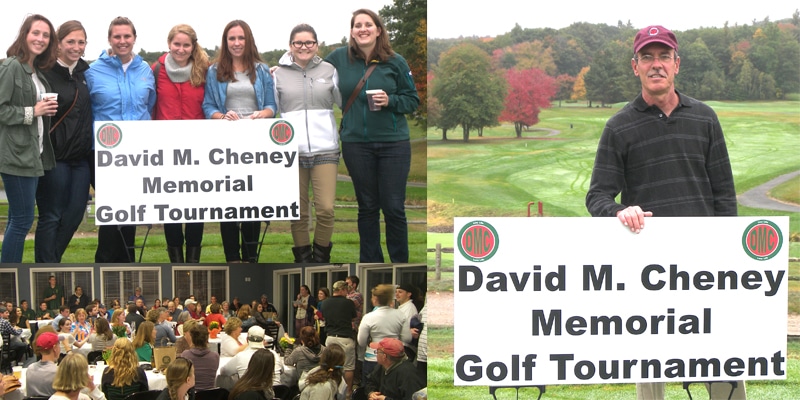
Cheney Golf Tournament Photo CollageThe second annual David M. Cheney Memorial Golf Tournament was held on Oct. 4, 2014 in Boxford, MA. Organizers for the event report that it was a sell-out. Proceeds from the event will benefit the David M. Cheney Scholarship Fund held at the University of Maine Foundation.

Cheney was a senior at the University of Maine when he tragically lost his life on November 16, 2012 as a result of a small plane crash in Owls Head.

The scholarship was created to honor David’s memory and his admiration for life. Cheney’s family chose to help other students attain a college education at UMaine through this scholarship.

The 2013 tournament raised over $16,000 in Cheney’s memory, it is expected that the final tally from the 2014 will exceed that total.

For more information about supporting this scholarship or establishing a new one, please contact the University of Maine Foundation.